There’s a strange comfort in watching strangers waiting in hour-long PopMart lines with you, building camaraderie through occasional glances that say, “Yup. We got ourselves into this. But it’s worth it.”
I was once in that queue, anxiously imagining which Labubu character my blind box would reveal. I am a Labubu victim — but not an embarrassed one. Why should I be? Though the Labubu fad might signal my unhealthy obsession with staying on-trend, carrying the furry creature makes me feel oddly special and stitched into the rest of the world.
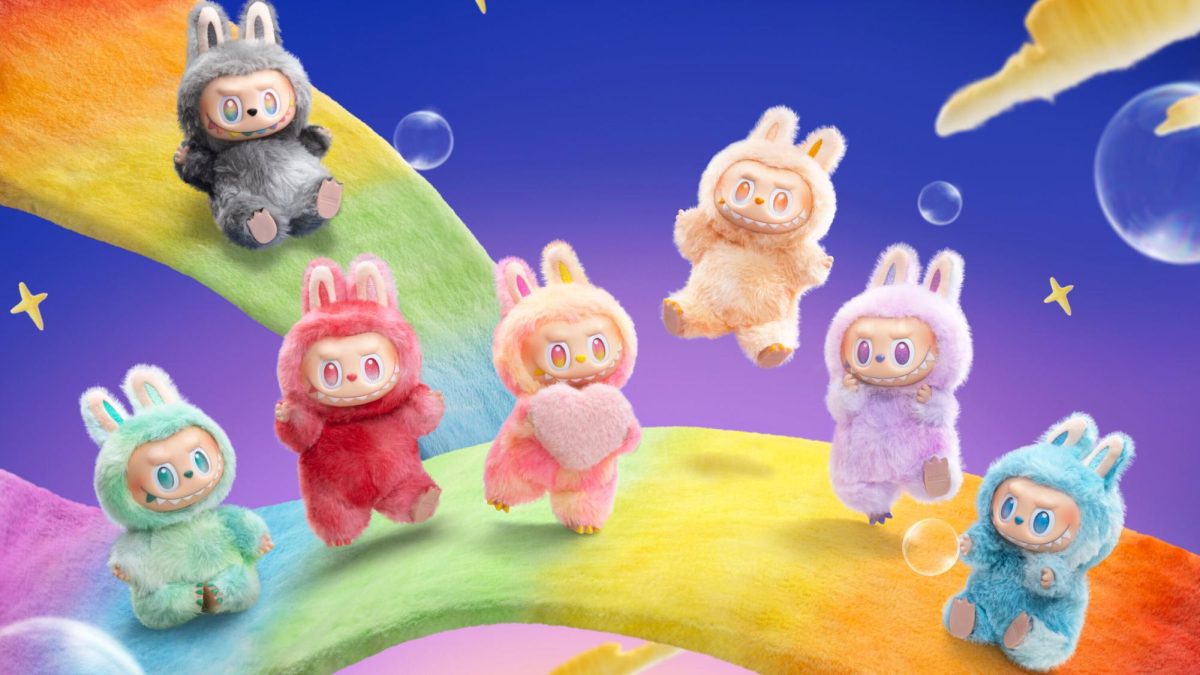
Created by Hong Kong artist Kasing Lung, the Labubu has dominated TikTok, Instagram, and stores with its rabbit-like ears, spiky teeth, outlandish clothes, and controversial, creepy stare. In the last year, Pop Mart, now present across 30 countries and 2,000 vending machines, earned approximately $423 million from its Labubu business. Prices begin at $20 and can reach an unimaginable $31,250 in resale markets. It’s not surprising that there has been a concerning surge in “Lafufus,” fake Labubus sold at unreasonably high prices. So, the real question is this: What does Labubu’s popularity say about us? Are we, ironically, the demonish monsters chasing after a false sense of belonging, unconsciously drowning in digital capitalism? Or are we innocent consumers longing for simple joy?
Looking back at history might reveal some answers; after all, Labubu isn’t the first toy to have infatuated us. From the 1980s Cabbage Patch Kids Riots to the recent Beanie Baby bubble, there have been similar phenomena like the Labubu fad, movements where people went overboard to obtain unaesthetic toys. Naturally, like past trends, the Labubu fad raises a sea of controversies and criticisms, especially regarding how Labubus became popular and managed to sustain sales. Critics dismiss it as yet another influencer-backed, SNS-generated phenomenon, with some claiming the Labubus are unnecessary byproducts of social media algorithms and exploitative marketing strategies. Sadly, these critiques hold meaning.
Yet, to me, the Labubu craze reflects our longing to have some simple, meaningless fun. It’s no less irrational than the hype around matcha lattes, Dubai chocolates, and Adidas Sambas. Except, this time, the object of devotion happens to be creepier, furrier, and harder to grasp–both physically and mentally. Still, maybe owning that furry monster will bring a much-needed smile.
At its core, the sheer diversity of Labubus symbolizes uniqueness and individuality. These dolls are exotic, just like us. Owning one grotesque Labubu feels like a sign of rebellion and self-protection against societal standards that still praise perfectionism and uniformity. In a way, Labubu’s seemingly uncanny nature also reflects the unpredictable, intimidating world we live in, one without right and wrong or black and white. Like the Labubus, we are all, in one way or another, “a little off” – different, awkward, and mysterious. And, perhaps that’s why these demon-like dolls allure us; we see ourselves in them.
Although some argue that fitting in is self-destructive, we have an innate human desire to belong. Similar to past products of digital capitalism that seeped into everyday life, the Labubu offers a welcoming path into the “main circle.” Even if it is stressful to sail across seas to acquire an authentic Labubu, it’s the post-purchase reassurance that makes the journey worth it. When I spot someone shopping with a Labubu on their purse, I acknowledge we’re both part of this same strange post-modern reality, one spent on rummaging through blind boxes. Thanks to my yellow and pink Labubu, I enjoy spontaneous conversations with new faces in hallways and classrooms, forging connections rooted in a shared, eccentric love for fluffy monsters.
Apart from nurturing community and self-expression, Labubus themselves are dopamine-generators. Consumers, young and old, appreciate Labubus’s puzzling silliness and childlike qualities, embracing its lack of meaning and depth. Immersed in otherwise grave, complicated lives, it’s comforting to own something a bit “off the hook” and straightforward, just like the ugly-cute Labubus. Though commercialized, Labubus can feel quite intimate when customized with fun accessories and brought along on everyday adventures. This doll is an addition to our box of nostalgic keepsakes, reminding us that it’s okay to love weird things and conform to shallow trends. If Labubus brings you childlike curiosity and glee–emotions we rarely get to feel nowadays–I’d say you did not waste your money.
So, the next time you run into a Labubu-owner, maybe don’t rush to judge them–or me. In between tests and college applications, I love styling my pink Labubu and browsing through new releases. It’s a guilty pleasure, yes, but sometimes, that’s what I need.