Visualize a room filled with the rich and powerful gathered to discuss world economics. You see graphs, spreadsheets, reports, and…a violin? At the 2026 World Economic Forum in Davos, Switzerland, music set the tone for conversations about the world’s future. Davos is an assembly of leaders, businesspeople, and activists who come together with the ambitious goal of addressing global issues and strategizing for a better future. The theme of the meeting was “A Spirit of Dialogue,” which emphasized listening to and contributing diverse perspectives (Markovitz et al.). And this January, they brought an intentional spotlight on art, one that is worth talking about.
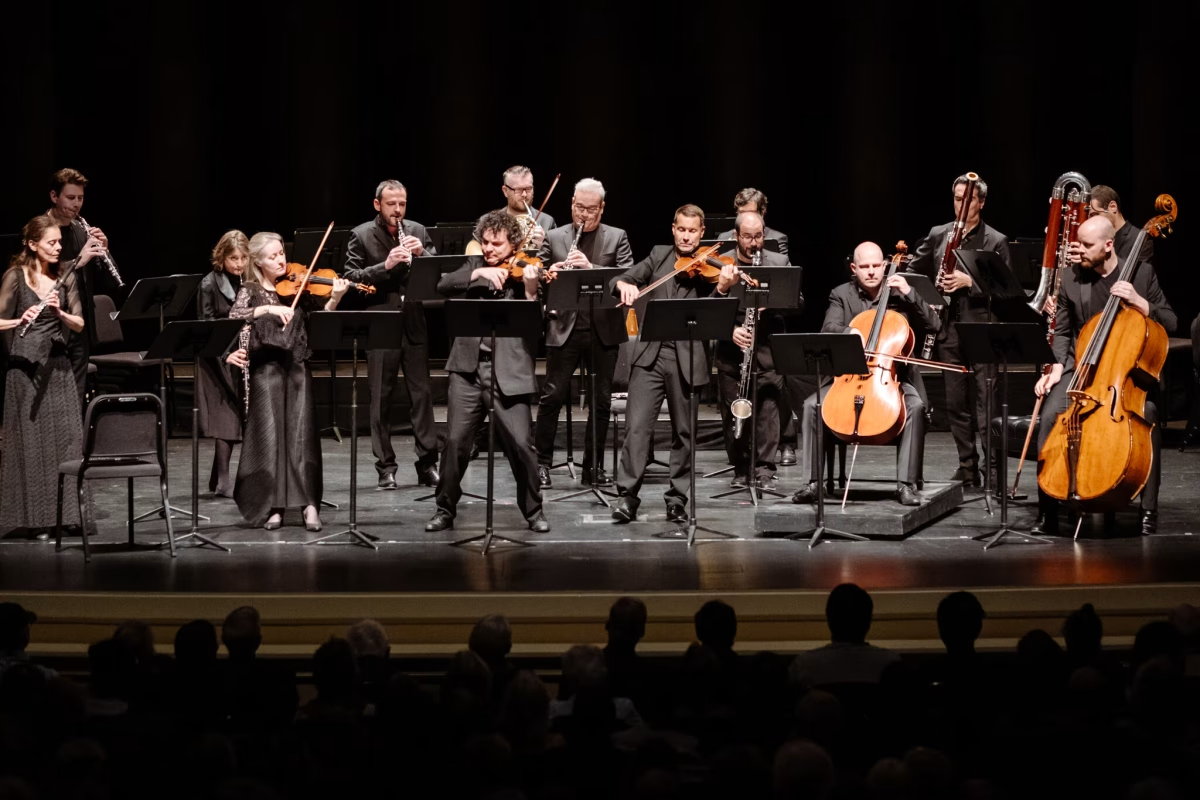
Day one of Davos opened with a bang as the Mahler Chamber Orchestra, joined by renowned violinist Renaud Capuçon, took the stage of the Congress Hall. In an effort to comprehend this unexpected fusion of art, politics, and economics, I watched a recording of their performance. Immediately, I was pulled in. The tight, quiet anticipation snapped by the orchestra’s first note elicited a physical reaction from me–I jolted in surprise.
The opening piece teemed with energy, its relentless pace reminiscent of daily life: an unyielding tempo that becomes more consuming the longer it persists. The orchestra then transitioned into a slow, sweet tune that resembled a lullaby. When it ended, I was left longing for the gentleness to last. What followed was a piece with distinct layers—I could isolate each instrument, distinguished by its unique tones: the languid lead violin, the plucking strings beneath it, the metronome-like cellos, and the nasal-toned harpsichord tinkling at the periphery.
The final piece was fast and aggressive, evoking images of a chaotic downward spiral, a feeling that often reflects the current state of our world. Through this intentional listening, I began to recognize the music’s deeper significance. It truly embodied how we should communicate with each other. We need open ears, different voices working in harmony, and a celebration of individuality to collectively construct a grander, greater picture.
My realization from this opening ceremony came when the famous musician and composer Jon Batiste brought a modern flair to the concert. His unending smile, uplifting lyrics, and carefree laughs lit up the stage. Batiste served as a reminder of why leaders gather at Davos in the first place. The ultimate goal should always be to strive toward a world where the unencumbered joy, creativity, and connection Batiste exhibited are available to all people.
Through this journey, my surprise at the union of art and economics morphed into admiration. Music evokes emotion and grounds us in our humanity, both of which are essential for collaboration on a global scale. Perhaps art in unexpected places is exactly where it needs to be. As we move through the world, we must remain vigilant in listening, feeling, and embracing our humanity.
Works Cited
Markovitz, Gayle, et al. “Davos 2026: What to Expect, Who’s Coming and How to Follow.” World Economic Forum, 6 Jan. 2026, www.weforum.org/stories/2026/01/davos-2026-annual-meeting-what-to-expect/.